
This article was originally published in Danish on September 28, 2022.
By Povl H. Riis-Knudsen
Everyone seems to agree that democracy is a good thing—at least in theory. In practice, things look a little different. Democracy apparently isn’t such a good thing after all.
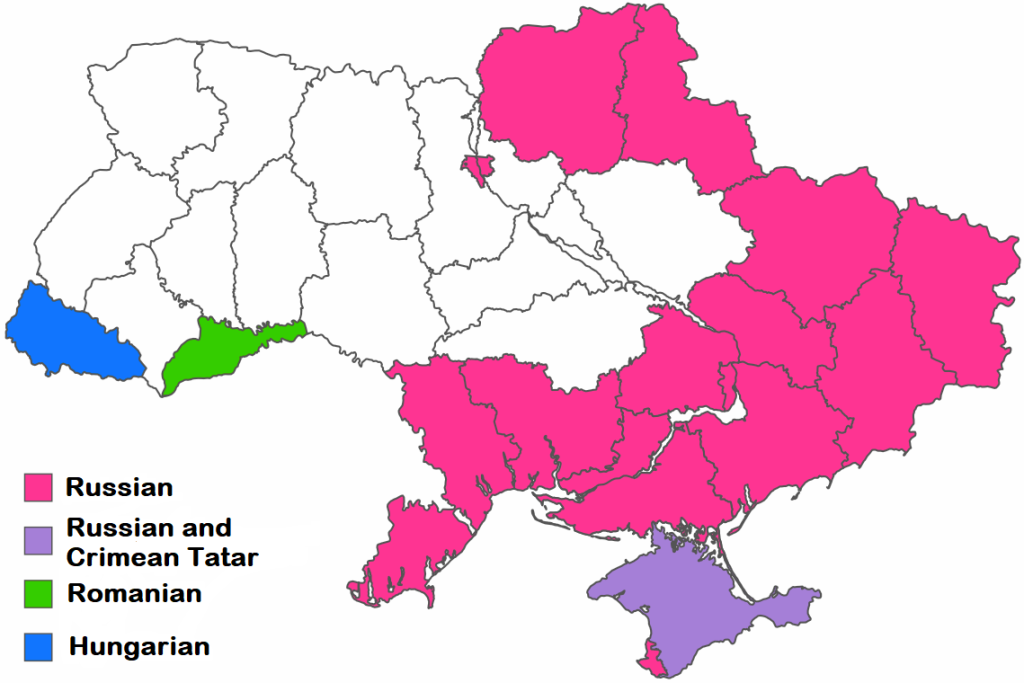
In connection with the conflict between Russia and Ukraine, the Russians are now holding a referendum on which country the populations in question wish to belong to. That really does seem to be the right way to settle the matter—far better than with guns. It would be a border far more decisive than the arbitrary borders Lenin drew at his desk in the Kremlin back then, which at the time had only administrative significance. But that is not the view in the West, where there is a desire to preserve Lenin’s legacy. It is not believed that such a referendum would be conducted properly—and there are, of course, problems associated with it, as some Ukrainians—and Russians—have fled to Ukraine and Russia, respectively, and may therefore find it difficult to cast their votes. A solution might well have been found—if, that is, Ukraine and the West had been willing to cooperate on such a vote. But they are not, because they know full well what the result of a fair and reasonable vote would be—at least in Donetsk and Luhansk. The Kherson region is more mixed. Zaporizhzhia too, but both are likely predominantly Russian. In other words, a defeat for Zelenskyy. So instead of cooperating with Russia to send election observers who could ensure a reliable vote that would be internationally recognized, they are instead boycotting the process and claiming in advance that the vote is a fraud. How prophetic!
Russia then had to find 1,000 election observers from various countries and 550 journalists to provide press coverage on its own. Are they independent and objective? Well, we can’t know anything about that, but here too, they’re being prophetic. The government-controlled Danish Broadcasting Corporation quotes a “senior researcher” at the Danish Institute for International Studies—another completely superfluous, government-run, left-leaning parasitic body paid for by hard-pressed taxpayers and which could easily be dispensed with—to claim that this is an attempt to legitimize the vote. Well, that is, of course, why election observers are invited. One could have had a say in who was selected for that role, but that was, of course, waived.
“They’re trying to create a sense of legitimacy around the vote by saying, ‘There are both international observers and journalists, and they’re looking over our shoulders and making sure everything goes right.’ But if you dig a little beneath the surface, a different picture emerges.
What the Russians are doing is filling these various media and election observer corps with their friends. These may be allied countries or individuals from other countries who support Russia.”
Here, it would have been appropriate for this so-called “researcher” to provide some evidence for his claim—and for the assertion that these people will not perform their duties reliably, even though they may come from countries “that support Russia.” That doesn’t rule out the possibility that they are decent people, does it? Or what does this parody of a researcher think, prophesying about the future based on his deep-seated and often demonstrated hostility toward Russia? In fact, such a situation could have been avoided by cooperating with the Russians on the vote. And it can be difficult to serve as an election observer from countries that do not support Russia. Thus, an election observer from Germany was fired from his government job because he is spending his vacation serving as an election observer in what will soon be the former Ukraine.
The West does not want democracy; it wants war. And it will likely get it. For when a region joins the federation, it becomes part of the Russian motherland, and a continuation of the daily and incessant bombardments of, for example, Donetsk will be an attack on Russia, and it will be answered as such, and I would be quite surprised if Russia does not rather quickly send an ultimatum to the West: Stop sending weapons to Zelenskyy, or you are at war with Russia! By that point at the latest, the West must choose between peace or annihilation.
 Danmarks Frihedsraad