This article was originally published in Danish on May 21, 2022.
By Povl H. Riis-Knudsen
Ukraine has begun a process of de-Russification. Russian names on streets, metro stations, cities, etc. are being removed. Nothing Russian is to remain. War monuments from World War II are being removed. Russian books are being banned if their content is offensive to the Ukrainian nation—and that is, of course, a somewhat flexible concept. So far, both Leo Tolstoy and Alexander Pushkin – who spent part of his exile in Odessa, where there is – or perhaps rather was – a lovely little Pushkin museum – have fallen victim to the axe and their monuments removed. We are just waiting for the public burning of their works. But what about Nikolai Gogol? He may have been Ukrainian, at least he was born in Poltava, but he wrote his works in Russian. Should he now be canonized or burned at the stake?
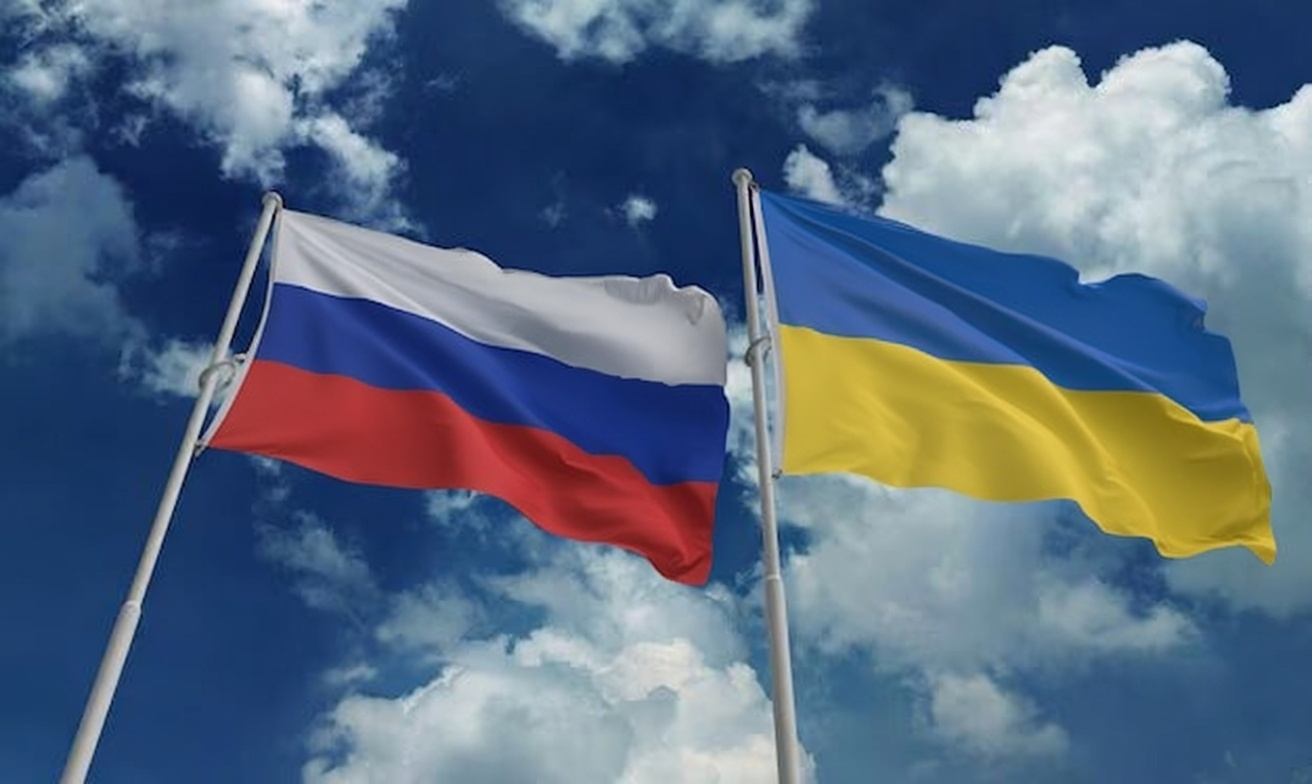
And here we come to the heart of the matter. Ukraine and Russia have been together for most of their history. I hardly know any Russians who do not have Ukrainian ancestors, and the situation is no different in Ukraine. There are Russians who have settled in Ukraine—and lots of Ukrainians who saw an opportunity in Siberia and moved there. That’s what happens in unions and multinational states. Populations mix. There’s hardly such a thing as ethnic Ukrainians as opposed to ethnic Russians. Ukrainians must be defined on the basis of their language and cultural affiliation and on the basis of whether they feel Ukrainian. But it would not be reasonable to separate the two peoples, the Russians and the Ukrainians, from each other. That would entail huge population movements and would probably fall under the definition of genocide. They are forced to live together in a marriage of convenience. And what about their long shared history – for example, during World War II? The Russian war memorial in Treptow, Berlin, was vandalized in support of the Ukrainians. But 25% of those who died in Berlin were Ukrainians.
Ukrainians and Russians share history and experiences – their languages are as closely related as Danish and Swedish. They have read the same literature, participated in the same – communist – organizations, watched the same – often excellent – Soviet films, celebrated the same holidays, and shared the same sorrows. They have shared scientific advances, world-class sporting achievements, and disasters such as Chernobyl – and together they have contributed to the creation of cultural masterpieces in ballet, music, and theater.
To this, Ukrainians would say that Stalin was particularly harsh on them. Perhaps, but Stalin was not Russian, he was Georgian, and his executioners in Ukraine were Jews – just like Zelensky, whose goal seems to be to kill even more Ukrainians than his predecessors. The young generation of Russians cannot be blamed for Stalin’s misdeeds. And then there is the fact that all other peoples also suffered under Stalin. Kazakhstan had its holodomor twice, both under Lenin (the civil war) and during collectivization. Well over 2 million people died out of a smaller population. The nomads of Asia were hunted to extinction, the Volga Germans were deported to Siberia, as were the Chechens, the Crimean Tatars, and many other peoples. But those who suffered most under Stalin were the Russians. This is another experience the two peoples have in common.
Against this backdrop, the de-Russification of Ukraine is a ridiculous project that will only deprive Ukrainians of their history and fill them with historically untenable myths. A lack of history does not bring strength, but weakness. A people without history is doomed; just look at Germany and Denmark as shining examples. Ukrainians must recognize that Ukraine is a multicultural state. Just look at the population map of Bessarabia south of Moldova. There is hardly a nationality that is not found in this small piece of land. And Russians must be recognized as equal citizens with linguistic and cultural rights. They had all of this at independence—which is why many Russians supported an independent Ukraine—but it was taken away from them by the Maidan coup, made in Washington. It will be necessary to return to the original constitution. Only then can there be peace, and the more weapons the West sends to Ukraine, the more people will be killed and the more destruction there will be. And when ridiculous states like Sweden and Finland claim to be threatened by Russia, so that they must finally join NATO, it is only because of the rampant warmongering in which Mette Frederiksen also diligently participates.
Neither of the two countries has any outstanding issues with Russia, and one only needs to visit the Finnish-Russian border region to see how much the Finns in particular enjoy the problem-free neighborliness that is now being put at risk. Finally, it would be completely insane for other countries to intervene in a conflict that is solely due to the foolish leaders of individual countries, and here I am thinking in particular of Estonia and Latvia, but also Poland. Peace in Europe can only be established together with Russia, never against Russia. In this context, it is recommended to read a little Bismarck!
As you probably know, I am not a fan of multicultural states. That is why I am opposed to the EU, whose goal is precisely to transform the European nation states into a multicultural hell “to ensure peace in Europe.” As we can see, multicultural states do not create peace, but war. But in some places, history has created facts that cannot be changed, and we have to live with them! And in the case of the Russians and Ukrainians, this should not be so difficult if foreign powers did not pour fuel on the fire.
 Danmarks Frihedsraad