This article was originally published in Danish on January 22, 2026.
By Povl H. Riis-Knudsen
There is unrest in Iran. The new president, Massoud Pezeshkian, may not be a good economist. I cannot judge that, but it is a fact that the Iranian economy is not doing well and that inflation has eroded the value of money. This kind of thing can easily cause unrest in the streets when there is a sudden deterioration. But why is the economy not in the best shape? Iran is an immensely rich country, and there is no rampant corruption as in Ukraine. So what is the problem?
Let us start by stating categorically that Iran is not an Arab country. Iran is an Indo-European country where the main language spoken is an Indo-European language that has nothing to do with Arabic, except that it is written with the same alphabet. It is related to Danish, German, English, etc. – although it can be difficult to see the relationship based on individual words. The Persians themselves are also Indo-Europeans – but a turbulent history has created a society with many minorities who speak different languages and have different religions, and where the inevitable mixing that characterizes such multicultural and multi-ethnic societies has taken place. There are several different types of Christian churches in Iran.
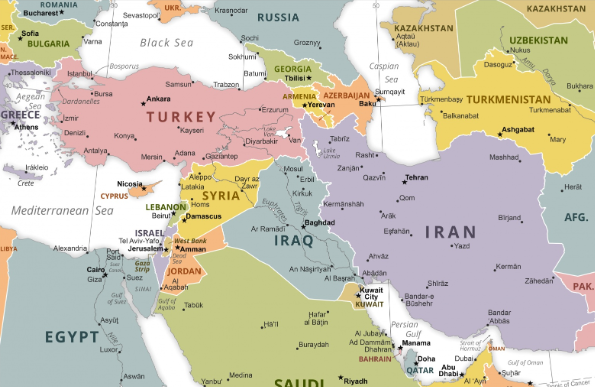
Here, too, we need to take a closer look at history. Iran is a millennia-old country that has lived under several different dynasties. Persia was a world empire until it became embroiled in wars with the Greek city-states. Its location on the map has meant that the country has always been important. It was the gateway to India. It therefore caught the interest of the British early on, and their influence was decisive for many years, until the British were gradually replaced by the Americans. Together, MI6 and the CIA overthrew the country’s democratically elected prime minister, who may have been a scoundrel, but that was not his crime. However, he had just nationalized the British-owned national oil company, considering Iran’s oil to be Iranian property—that was the reason he was deposed. Instead, what can only be described as an American regime was installed, with Shah Mohammad Reza Pahlavi as its figurehead. The Shah attempted to bring Iran closer to European and American culture, lifestyle, and dress. We see this as “progress” – but a rapidly growing proportion of the Iranian population saw it differently. At that time, most Iranians lived in rural areas and small towns (and to some extent they still do). They lived a traditional, Muslim-influenced life, and they wanted to continue doing so. The more radical Islamists took advantage of this, and to counteract it, the Shah established an increasingly oppressive regime of terror, in which his opponents were imprisoned, tortured, and killed (the Ebrat Museum in Tehran speaks clearly about this1). Oppression breeds resistance, and the Muslim movement grew rapidly. Its leader, Ayatollah Khomeini, was sent into exile in Paris, from where he distributed cassette tapes with his ultra-Muslim message to his people in Iran. This culminated in a popular uprising, during which students stormed the American embassy, which served as an extensive spy center, not only against Iran, but also against the Soviet Union, whose border was not far from Tehran. The employees were held hostage for 444 days before they were allowed to return home. The Shah fled, and Khomeini was able to return home and become the country’s de facto leader. Life changed significantly, but it was the life that the vast majority of the population wanted. We call it a step backwards, but it is simply a different culture – and an expression of democracy in practice.
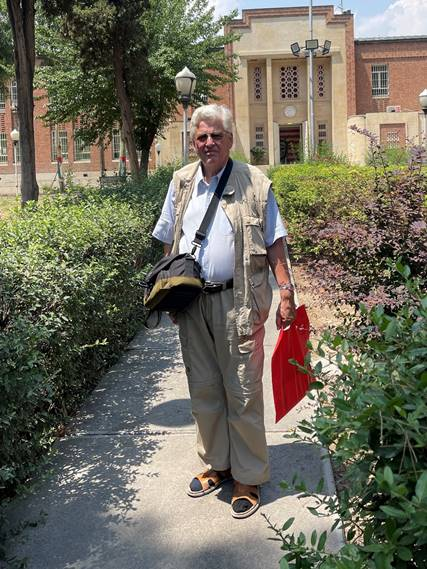
The next act in the drama was that the US paid Saddam Hussein to start a bloody war against Iran that lasted eight years. Saddam lost the war and was not allowed to take Kuwait as a reward, as he had been promised. We know how things turned out for Saddam. He knew too much. There is a large museum in Tehran about this war, which is well worth a visit2. Next to it is a smaller museum about Hezbollah’s fight against Israel in southern Lebanon.
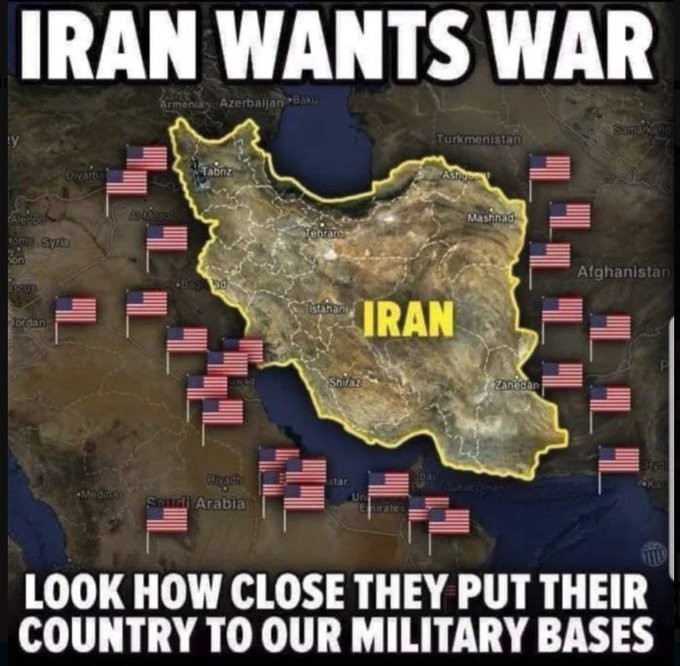
The US still has no diplomatic relations with Iran and has been trying ever since to bring down the Islamic regime through sanctions against the country’s economy. As in Venezuela, the Americans had been allowed to develop the oil industry, which meant that spare parts for these systems were now in short supply. Iran is an oil-rich country, but today there are empty gas stations and long lines—simply because there is a lack of refinery capacity. On the other hand, a tank of gas costs less than a liter costs here. Most recently, the US—strongly encouraged by Israel—has carried out bombings of Iran, allegedly to prevent the country from developing nuclear weapons. Now, of course, one might ask oneself whether the US dictator, Donald Trump, should be the one to decide this. Who made him the ruler of the world? After all, Iran has signed the treaty against the proliferation of nuclear weapons and allowed inspections of its nuclear facilities. Israel has not, and no one seems to be bothered by this terrorist state’s growing arsenal of nuclear bombs. In any case, it would benefit world peace if countries refrained from interfering in each other’s internal affairs and local conflicts. Countries must solve their own problems!
The sanctions and the lack of tourists are obviously hurting. Hotels and businesses that cater specifically to tourists are suffering noticeably – but of course there is also a local audience with strong purchasing power. Iran has an economic upper class – living in the northern part of Tehran – and a very large middle class. However, the uprising we are seeing today is just one of the usual regime change operations that the US is expert at carrying out – and which always leave the countries affected in total chaos. Look at Afghanistan, Iraq, Libya, Ukraine, etc.
We must not forget that both the US and Israel have, of course, long since sent their agents into the country along with 40,000 Starlink terminals. It is not difficult to obtain an entry visa to Iran. It is my impression that there is really no control over who is allowed into the country – and then there is a green border several thousand kilometers long. There is obviously an entire army of Mossad agents in Iran, because Iran is the only remaining country on Israel’s list that it has not (yet) succeeded in destroying. Yes, Israel even boasts that it is marching alongside the Iranian demonstrators.
It starts with a currency crisis that brings ordinary people out onto the streets. A currency crisis is easy to stage when you have the necessary resources. Over a long period of time, you buy up the currency you want to destroy – and the rial is not the strongest currency on the market. Once you have accumulated a sufficient amount, you sell everything at once, and the exchange rate falls like a stone. It’s no big deal – all it takes is people and capital. Israel and the US – which is simply Israel’s extended arm – have both.
When people take to the streets, you send out your agents to escalate the situation. They arrange for bonfires to be lit in front of subway entrances, burn buses, etc. When everything is boiling over, you send in the snipers – just like in Kiev in 2014. They shoot at everyone – but when they hit the security forces, the latter shoot back at the demonstrators, so that it can be claimed that the security forces are murdering the population. At the same time, so-called “influencers” from foreign countries report in, pretending to convey alarming news from acquaintances in Iran. When the authorities shut down the internet, Starlink terminals come into use. It is the same script that is used everywhere – Kiev, Tbilisi, Caracas, Tehran, Tripoli, etc.
The goal is, of course, to give the US an excuse to send in the military – and with an insane president who openly states that he couldn’t care less about national and international law and only follows his own elastic – or non-existent – conscience, anything is possible. Under these circumstances, the US can no longer be described as a constitutional state. Nothing is predictable in principle – everything depends on the dictator’s whims. However, I will venture to predict one thing: he will always follow Israel’s slightest hint. His main sponsor is Sheldon Adelson’s widow, Miriam. The money does not, of course, come from real work, but from casino operations in Las Vegas. Added to this are Trump’s family ties to Israel – not to mention the leverage Mossad may have over him. He is Israel’s president more than he is the president of the United States. When he says he will intervene if the security forces shoot at the demonstrators, one does not know whether to laugh or cry. His concern is touching, of course. Meanwhile, his lord and master in Jerusalem is murdering tens of thousands of Palestinian civilians (men, women, and children), committing genocide against the country’s actual population, a true holocaust. Where is Trump’s human sympathy here? Anti-Semitism can only be combated by combating the causes of anti-Semitism!
If Trump had been interested in the welfare of the ordinary Iranian population, he would naturally have lifted all sanctions, as these primarily affect ordinary people. And so does the war he wants to start against the country.
One thing we must remember when it comes to media coverage is that we can no longer trust anything we see. People more technically savvy than I have analyzed the images that are shown: some of them are from demonstrations in support of the government, others are images taken in other countries or under other circumstances, and many are simply manipulated or “enhanced” using artificial intelligence. We saw the same thing in Caracas, where it was pretty obvious that a large “demonstration” we saw in the streets with a huge Venezuelan flag came from some sporting event and had nothing to do with Maduro.
I become discouraged and disheartened when I read the posts of well-meaning Danes about this conflict on Facebook and elsewhere. Let me just say it again: Virtually no Danes know anything about Iran! Of course, one can have an immediate opinion about the theocracy, but let me be clear: The theocracy exists in Iran—not here. What kind of government Iran has is none of our business! The Iranians have chosen it themselves, and it is a lot better than its reputation. It is trying to preserve the country – unlike the European regimes that are digging Europe’s grave! Life in Iran is quite normal. Admittedly, you cannot get alcohol, but excellent alternatives have been developed, if necessary. And it certainly does not harm public health. Women must wear a hijab – or at least a scarf. When I was a child, women here also wore scarves when they went out. This annoys beautiful young girls – and it is considered foolish far into the ranks of the government. But it is something you can live with – it is really not an existential issue! In practice, it is taken quite lightly, except in public buildings. You just have to avoid provoking anyone. When driving, you have to be aware that speed cameras – and there are many of them – also check whether women are wearing their hijabs. The fines are substantial. However, a large part of the population walks around in black overcoats anyway – because that is their custom.
Would I want to live in Iran? No, because it is not my culture – and it should not be. We have an unfortunate tendency to believe that the whole world should be organized the way it is in our own country. But I enjoy visiting Iran as a guest – and as a guest, I adapt to the customs and traditions of the country.
You should not discuss politics unless you agree with the system. It is a well-known fact that the police have provocateurs who try to get people to criticize the regime so that they can crack down on them. Foreigners are favorite victims of this, so you should not discuss politics with strangers. But here, you should also not say that there are only two genders, or that black people belong in Africa.
The clerical regime has overwhelming support among the country’s population as a whole – and that support has not diminished despite the fact that the US and Israel openly support the uprising. People have learned from their historical experiences with the US, and they are not keen to repeat them. The US is hated in Iran. Isn’t anyone dissatisfied? Yes, of course. There are people here who are dissatisfied too! I hate Mette Frederiksen and her whole gang more than words can express, and I know that this system is designed in such a way that it cannot be removed through elections. I can emigrate (which I would do if I were younger), or I can sit back and, in my powerlessness, content myself with studying medieval manuals on methods of torture and execution, at least in order to vent the pent-up hatred I feel toward all those who have destroyed my country! Even if I could gather a million people who think like me, Mette Frederiksen would still have a solid majority of brainless fools behind her. Should this one million people use violence to seize power over the vast majority? If you believe that the issue is so important that it concerns the very existence of the people, you could perhaps argue for it, but in Iran, the country’s existence is not at stake under the current regime – it is only a question of the habits and comfort of a relatively small number of people – their “freedom.” If the rebellious forces were to win, it would be Iran’s future as a nation that would be threatened. Incidentally, there are 90 million inhabitants in Iran, of whom approximately 20 million live in Tehran and its suburbs…
I would strongly advise people who know nothing about Iran to be less assertive in their statements. If they want to find out more about Iran, they are fortunate that there is a book in Danish that provides the reader with a very thorough introduction to this foreign culture. If one were to criticize it, it would be because it is so full of information that it can be difficult to maintain an overview.
The book in question is:
Rasmus Chr. Elling: Irans moderne historie (The Modern History of Iran)
Gyldendal 2022
The book is only in Danish, sadly.
Perhaps it could be put into production here?
Travel videos from Iran with Povl
Notes
- https://altomiran.dk/ebrat-museet-i-iran-rummer-en-moerk-morbid-historie/. (Use browser translation.) ↩︎
- https://irantravelingcenter.com/da/st_activity/museum-of-the-islamic-revolution-and-holy-defense-tehran/ – Opening hours differ from everything stated in brochures and books. In summer, for example, they don’t open until 4 p.m. to save electricity for the air conditioning. This may change, and telephone enquiries automatically give the normal opening hours. I only succeeded on my third attempt. ↩︎
 Danmarks Frihedsraad