This article was originally published in Danish on September 12, 2015.
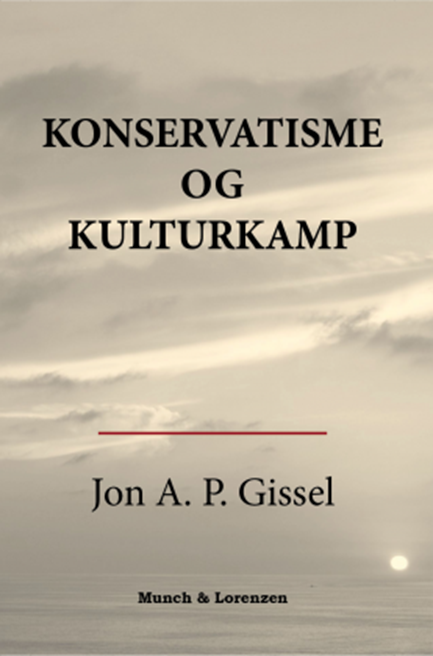
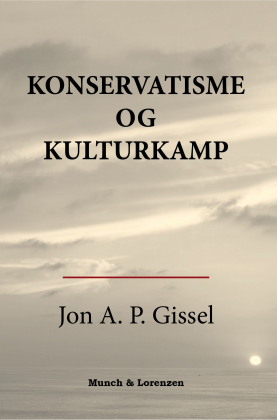
Jon A. P. Gissel:
Conservatism and the Culture War (Konservatisme og kulturkamp)
Aarhus: Munch and Lorenzen, 2014
Read by Povl H. Riis-Knudsen
A treatment of Danish conservatism’s fierce battle against the Brandes brothers’ and their followers’ fight against European culture has long been lacking, and Gissel deserves great credit for having ventured into this inflammatory subject with a positive approach, where Danish conservatism has otherwise only been able to count on a one-sided smear. The publisher, the Danish Council for Humanities Research and the Velux Foundation also deserve thanks for making this work possible.
Jon Gissel is a very fine and learned person, but somewhat frightened, who likes to speak his mind, but avoids the extreme consequences of what he says. He has entered dangerous territory here, and he carefully avoids drawing any necessary conclusions from his work. The biggest flaw in the work, however, is its title. The book should not have been called Conservatism and the Culture War, but rather Christianity and the Culture War, because that is what the book is mainly about, and that is sad. It’s easy to get the impression that the culture war was only about Christianity as opposed to Darwinism. Gissel himself says about this: “No party has a monopoly on Christianity, but for me conservatism is unthinkable without Christianity. A conservatism that is only about tax cuts and highways or, for that matter, nationalism or humanism, makes no sense to me. Rather, such a project can seem dangerous, like materialism or idolatry, for example of the nation.” (Page 7 – reviewer’s emphasis). Christian stubbornness is thus still alive and well, and it should of course also be noted that Gissel distances himself from the national as the center of people’s lives. Gissel doesn’t dare to be national either, but the culturally conservative anti-Brandesians were not afraid of that, and some of those mentioned were not particularly Christian either – well, some not at all. However, they are not the ones who play the biggest role in the book, but the representatives of the blackest Christianity imaginable, people like Martensen, Mynster, Monrad and Scharling, whose distorted arguments against Darwinism fill the book and actually answer one of its crucial questions very well: Why did cultural conservatism have such a hard time in a political and cultural environment that was essentially conservative and where the Right held absolute political power until 1901? There are of course several reasons, but one of them was that it was very difficult to support these dark men in their fight against Darwin and science. Throughout its history, the Church has suppressed any form of science that could cast doubt on the Bible’s account. For centuries, they literally held to a worldview where the earth was flat and the center of the universe, until finally, forced by the weight of evidence, they were forced to reluctantly abandon this position. In the late 1800s, it was still believed that the world was created in 6 days some 6,000 years ago – and Gissel apparently still believes it. When you insist on seeing conservatism’s fight against the Brandes brothers as an extension of this battle against science, you are doomed to lose. No one with even a shred of common sense could support such eclipsed efforts in light of the progress that scientific research had made. Faith is an assumption about something you don’t really know anything about, superstition is belief in something you can prove to be wrong! The creation story is superstition!
For Gissel, the church princes of the time and many others, it was all supposedly a question of free will. In a world ruled by science and evolution, humans could not have free will – we would be like animals. Free will is only possible as a creature of God. Only by accepting God’s grace and omnipotence can man be considered free! This is an attitude still found in Christian circles from Søren Krarup to Jehovah’s Witnesses, but it is of course nonsense. First and foremost because, in the most important questions, man has no free will. We do not decide whether we want to be born or whether we want to die. We don’t decide whether we want to be sick, intelligent or bow-legged. On the most important questions in life, we have no influence – whether we are Christians or not. But the difference between us and animals is not the presence of an indefinable soul, but the development of the brain that some of us have, so that we have the energy to do much more than eat and reproduce, which is pretty much the only occupation of animals – and some people. When it comes to these other pursuits, we naturally have free will – unfortunately also to do the wrong thing, including acting against thelaws of nature. We can act according to a given morality or we can act against it – we can decide to build up or to break down. We can choose whether to murder and steal – or not. We have absolute freedom – and there will be no grace that can exempt us from the results of our actions, though sometimes these only become apparent after generations. The limits are set by law and general moral principles, which are a necessary prerequisite for the formation of society, and without society, man would hardly have survived as a species and certainly would not have been able to develop either technology or culture. Morality and social behavior are thus in themselves selection factors in evolutionary development, and human beings are by no means irresponsible, quite the contrary. They have a responsibility to the society in which they live and to future generations, whose development prospects are largely determined by the choices made by the current generation. Yes, we can even talk about a responsibility to the cosmic order in which we live – which we can easily call divine. If we do not fulfill this responsibility, humanity will simply perish – and it is well on its way to doing so.
It can be difficult to see what freedom a Christian actually has. If, like Søren Krarup, you believe that you only need to be a Christian on Sunday mornings and holidays, then you can enjoy the same freedom that the rest of us have. For those who take their Christianity more seriously, and don’t just want to freewheel in trust in grace, Christianity entails heavy obligations to lead a Christian life and living and to renounce the material world and become pure spirit. In these endeavors there is little freedom, but a long series of prohibitions and obligations that aim to turn man into a robot. According to Luther, we are slaves to sin, and as we all know, a slave has little to do with his free will.
A statement like “Life after death is a necessary condition for life before death” is a good example of the sophistic nonsense that is used to defend the conservative position – but which has little to do with cultural conservatism. The Brandes brothers and their proselytes not only fired their broadsides against religion, but against all morality, against the family, against art, against tradition, against the political order and against everything that constituted Danish culture and intellectual life and the framework for the existence of the entire nation. Their goal was to break down everything that bound society together, and they and their successors were extremely successful in doing so! However, they also did so with a vehemence, fanaticism, hatred, intransigence and uncompromisingness that was foreign to Danish intellectual life, and which the nice, educated conservative people found it difficult to respond to, as they did not master this form of combat, which was deeply opposed to them. The entire form of the debate was extremely un-Danish – and no one should be surprised, as the Brandes brothers were not Danish. This is where Gissel gets into serious trouble. He does not want to be accused of anti-Semitism, and he only wonders why he only knows of one Jew – Jakob Davidsen – who opposed some of Georg Brandes’ attacks on religion.
“… if that is the case, one has to wonder, and it would be deeply regrettable if that were the case, because it could not avoid giving the impression that they were holding hands over a fellow tribesman. On the other hand, expressions can be so offensive that you don’t react if you feel that repeating it makes you blasphemous. This can also be seen as a kind of explanation for why there was not a stronger Christian reaction to Brandes’ statements! (s. 65).
Vissevasse. The Jews have only survived as a people and religion because they have always managed to stick together, while Jewish intellectuals with their superior verbal intelligence have stirred up discord among the host peoples, so that they have been at odds with themselves and each other.
One of the cultural conservatives who reacted strongly against Brandes was Harald Nielsen, who immediately recognized the absolute Jewishness of the so-called “Modern Breakthrough”, which he made no secret of in his books. Gissel notes that Christianity is probably not very important in Harald Nielsen’s worldview (page 12) and then relegates the most important and perceptive Danish anti-Brandesian to an insignificant supporting role in his book.
To fully understand Brandes’ Modern Breakthrough, you need to read American psychology professor Kevin MacDonald’s The Culture of Critique, An Evolutionary Analysis of Jewish Involvement in Twentieth-Century Intellectual and Political Movements, 1998 – a book that Gissel clearly does not or will not know. Of course, MacDonald does not mention “The Modern Breakthrough”, which few outside Denmark really know anything about, but after reading the book’s 350 pages, you can add the missing chapterb yourself. The book follows the common thread through a selection of ethnically self-conscious Jewish intellectuals’ efforts to break down the societies they live in and promote worthlessness, ugliness, lies and dissolution, “deconstructing” art, history, science, religion and the norms that bind society together. Such forces seek a wound or weakness in their opponents. Once the eggs are laid, their larvae will automatically penetrate the opponent’s organism and slowly but surely kill it. By weakening the majority, the minority is strengthened – an effective survival strategy. The greatest weakness of European-inspired humanistic culture is that it has no conscious ethnic-centered survival strategy of its own.
Danish cultural conservatives had no adequate defense against this endeavor, and there were undeniably also wounds and weaknesses. One of these weaknesses was that the conservative camp lacked forces capable of creating living art. There were plenty of learned, knowledgeable, well-meaning and diligent intellectuals, but there weren’t really any artists who could add value to the continuing traditions of the Golden Age. True, there were some creative artists among the people who rebelled against Brandes, but they were and became epigones, even if Gissel does not like the term. One of the most diligent was Ernst von der Recke, who was undoubtedly the best rhymer and playwright of the era. He left behind a large production of beautiful and eloquent poems and skillfully constructed historical dramas, but they have no real life and, despite their popularity, their relevance to the people of the time was extremely limited. This also applies to “The Mother of God at Marienburg”, which is particularly emphasized by Gissel. It is a beautiful poem about the artist’s attachment to his masterpiece to the extent that he must die when the work is finished and he has reached the highest insight. However, you only have to compare it to Oehlenschläger, Ewald, Grundtvig or Aarestrup, for example, to see its lack of originality. Recke did not write for pleasure, but was driven to it by a sense of duty – the duty to continue the tradition. However, a poem must be a divine revelation that one cannot help but write down. Among the prose writers, Gjellerup was the only one of real significance, but he did not reach the level of the Brandes disciple J.P. Jacobsen, the translator of The Origin of Species.
For 50 years, Oehlenschläger had dominated and ruled Danish intellectual life. It is not surprising that his death triggered a reaction from the new generation of poets, nor that they eagerly absorbed the ideas and knowledge of the new age. Literature cannot continue to ignore the main problems of its time and live in an unreal prehistoric dream world. Oehlenschläger’s time was irrevocably over. At the end of his Memoirs, he writes “But now we must also soon stop, not because the inner strength is lacking, but – the material is exhausted; I find no more subjects in my mind. I cannot describe the present: I do not know it; and who knows it right? Hardly our Lord knows it, and it does not know itself.” (Gissel page 37f). An era was over, and the new era sought a new form and a new content. This is natural, but renewal did not necessarily have to be the same as destruction! In light of the lack of strong and creative personalities among the conservatives, it is not difficult to understand why the new forces were seduced by the eloquent and highly gifted pied piper Georg Brandes. However, it is more difficult to understand that so many gifted conservatives could not see that by rejecting natural science they were chaining themselves to a carrion, which naturally had to isolate them in their time, and that a stubborn rejection of any literary development is simply against the nature of literature and art. The irony is that, with a little ingenuity, Christianity can easily find a place in the modern worldview, if you are only willing to give up positions that you will not be able to maintain in the long term anyway. Gissel quotes the following sentence from Martensen’s “The Christian Ethic”: “That the human will is free means that it has the power, within the conditions set by God, torealize its being by self-determination.” (Page 289 – reviewer’s emphasis). Could not the conditions set by God be readily defined as the laws of nature, if we take God as the first cause? The Church has swallowed several even bigger camels than this over the years! Isn’t this discussion about “free will” nothing more than fly-fishing on a higher plane?
There are good reasons to have reservations about Gissel’s work, but of course it also contains a large number of good observations and a lot of useful knowledge that is not so easily accessible today, and above all, it finally gives voice to the forces that fought Brandes. The book should not be missing in the library of nationalists interested in culture.
Povl H. Riis-Knudsen
Translated by means of AI
 Danmarks Frihedsraad